


Types of Pet Snakes: Complete Guide to the Best Snakes for Beginners and Experienced Reptile Owners
Pet snakes are some of the most fascinating reptiles to keep at home. They are quiet, elegant, low-noise, visually striking, and deeply connected to the wild beauty of nature. From the beginner-friendly corn snake to the calm ball python, the bold California kingsnake, the colorful milk snake, and the impressive boa constrictor, there are many types of pet snakes for different experience levels.
But not every snake is right for every owner. Some pet snakes are excellent for beginners because they are hardy, manageable in size, reliable feeders, and generally calm with regular gentle handling. Other snakes are better for experienced reptile keepers because they need larger enclosures, more precise humidity, advanced handling, or long-term space planning.
This complete guide explains the most popular types of pet snakes, including beginner snakes, intermediate snakes, and advanced snakes. You will learn how different species compare in temperament, size, feeding, enclosure needs, handling, lifespan, and beginner friendliness.
At ArtOfRoyals, we celebrate reptiles, animals, and wildlife through premium canvas wall art. If you love the elegance of snakes and exotic reptiles, explore our Reptiles Canvas Wall Art Collection, Animals Canvas Wall Art Collection, and Nature Canvas Wall Art Collection for wildlife canvas prints, animal canvas wall art, nature inspired wall art, and premium canvas wall art designed for reptile rooms, offices, living rooms, and bold wildlife-inspired interiors.
What Are the Best Types of Pet Snakes?
Quick Answer: The best types of pet snakes for beginners are usually corn snakes, ball pythons, California kingsnakes, milk snakes, rosy boas, and Kenyan sand boas. Corn snakes are often the easiest beginner snake overall, while ball pythons are popular for owners who want a calm, slow-moving snake.
The best pet snake depends on your experience level, comfort with feeding frozen-thawed prey, available enclosure space, handling expectations, and long-term commitment. A corn snake may be best for a complete beginner who wants an active, reliable feeder. A ball python may be better for someone who wants a calm, slower snake and is ready to manage humidity carefully. A boa constrictor can be rewarding, but it requires more space and experience.
Pet Snake Comparison Table
| Snake Type | Difficulty | Temperament | Adult Size | Best For |
|---|---|---|---|---|
| Corn Snake | Beginner | Docile, active, curious | Medium | First-time snake owners |
| Ball Python | Beginner to intermediate | Calm, shy, slow-moving | Medium | Patient owners wanting a calm snake |
| California Kingsnake | Beginner to intermediate | Active, bold, food-motivated | Medium | Owners who want an active snake |
| Milk Snake | Beginner to intermediate | Colorful, active, sometimes shy | Small to medium | Owners who want colorful display snakes |
| Hognose Snake | Intermediate | Dramatic, curious, unique | Small | Owners who want a small unusual snake |
| Rosy Boa | Beginner to intermediate | Calm, slow, manageable | Small to medium | Owners wanting a gentle boa |
| Boa Constrictor | Intermediate to advanced | Powerful, calm when socialized | Large | Experienced keepers with space |
1. Corn Snake
The corn snake is one of the best pet snakes for beginners. It is generally hardy, docile, active, manageable in size, and usually a reliable feeder. Corn snakes are also available in many beautiful color morphs, making them popular with both new and experienced reptile keepers.
Corn snakes are native to North America and are often found around forests, fields, farms, and grassland edges. In captivity, they need a secure enclosure, warm and cool zones, hides, water, safe substrate, and enrichment such as branches or cover.
Corn Snake Care Basics
- Difficulty: Beginner-friendly
- Temperament: Curious, active, usually docile
- Diet: Appropriately sized frozen-thawed rodents
- Habitat: Secure enclosure with heat gradient and hides
- Best for: First-time snake owners
Why Corn Snakes Are Popular
Corn snakes are popular because they combine manageable care with interesting behavior. They are more active than ball pythons and may explore their enclosure, climb branches, and investigate their surroundings. They are also usually easier to feed than some picky snake species.
The main beginner concern with corn snakes is enclosure security. Corn snakes are excellent escape artists, so a secure lid or locking enclosure is essential.
2. Ball Python
The ball python is one of the most popular pet snakes in the world. Known for its calm nature, thick body, beautiful patterns, and slow movement, the ball python is a favorite among reptile owners who want a gentle, handleable snake.
Ball pythons are native to parts of West and Central Africa. In captivity, they need secure hides, proper warmth, stable humidity, fresh water, and a low-stress enclosure. They are generally calm, but they can be shy and may refuse food if stressed or if conditions are not ideal.
Ball Python Care Basics
- Difficulty: Beginner to intermediate
- Temperament: Calm, shy, slow-moving
- Diet: Appropriately sized frozen-thawed rodents
- Habitat: Secure enclosure with stable humidity and snug hides
- Best for: Patient owners who want a calm snake
Why Ball Pythons Are Popular
Ball pythons are popular because they are usually calm and easy to hold. Their slow movement makes them less intimidating for many new keepers. They also come in many beautiful morphs and patterns.
The main challenge is feeding and humidity. Some ball pythons refuse meals during stress, shedding, or seasonal changes. They also need proper humidity to shed well and stay hydrated.
3. California Kingsnake
California kingsnakes are bold, active, and visually striking snakes. They are known for their strong feeding response and attractive banded or striped patterns. They can make good pets for keepers who want an energetic snake, but they may be slightly more intense than corn snakes for some beginners.
California Kingsnake Care Basics
- Difficulty: Beginner to intermediate
- Temperament: Active, bold, food-motivated
- Diet: Frozen-thawed rodents
- Habitat: Secure enclosure with hides and heat gradient
- Best for: Owners who like active snakes
What Makes Kingsnakes Unique?
Kingsnakes are powerful feeders and may be more food-driven than some other beginner snakes. This means keepers should use feeding tongs and develop safe feeding routines. They are beautiful and hardy, but they require respectful handling and secure housing.
4. Milk Snake
Milk snakes are colorful, patterned snakes related to kingsnakes. They are admired for their red, black, white, yellow, or orange banding depending on species and morph. Their bold appearance makes them appealing for reptile owners who want a visually dramatic snake.
Milk Snake Care Basics
- Difficulty: Beginner to intermediate
- Temperament: Active, sometimes shy, generally manageable
- Diet: Frozen-thawed rodents
- Habitat: Secure enclosure with hides and cover
- Best for: Owners who want a colorful pet snake
Milk snakes can be good pets, but they may be quick when young. With gentle handling and proper setup, they often become more manageable over time.
5. Hognose Snake
Hognose snakes are small, unusual snakes with upturned noses and dramatic defensive behaviors. They may hiss, flatten their necks, bluff strike, or play dead when frightened. Despite the drama, many hognose snakes are harmless in temperament and become fascinating pets for experienced beginners or intermediate keepers.
Hognose Snake Care Basics
- Difficulty: Intermediate
- Temperament: Curious, dramatic, unique
- Diet: Frozen-thawed prey, though some can be picky
- Habitat: Secure enclosure with substrate for burrowing
- Best for: Owners who want a small, unusual snake
Hognose snakes are loved for their personality, but they may not be ideal for every beginner because feeding can sometimes be inconsistent and their behavior may confuse new owners.
Featured Snake Artwork for Reptile Lovers
Snake keepers often appreciate the quiet power, mystery, and elegance of reptiles. Premium snake artwork can bring that same energy into a reptile room, home office, gaming setup, rustic cabin decor, or nature-inspired living space. These ArtOfRoyals wildlife canvas prints are ideal for collectors who love animal canvas wall art, snake wall art, and luxury wildlife wall art.
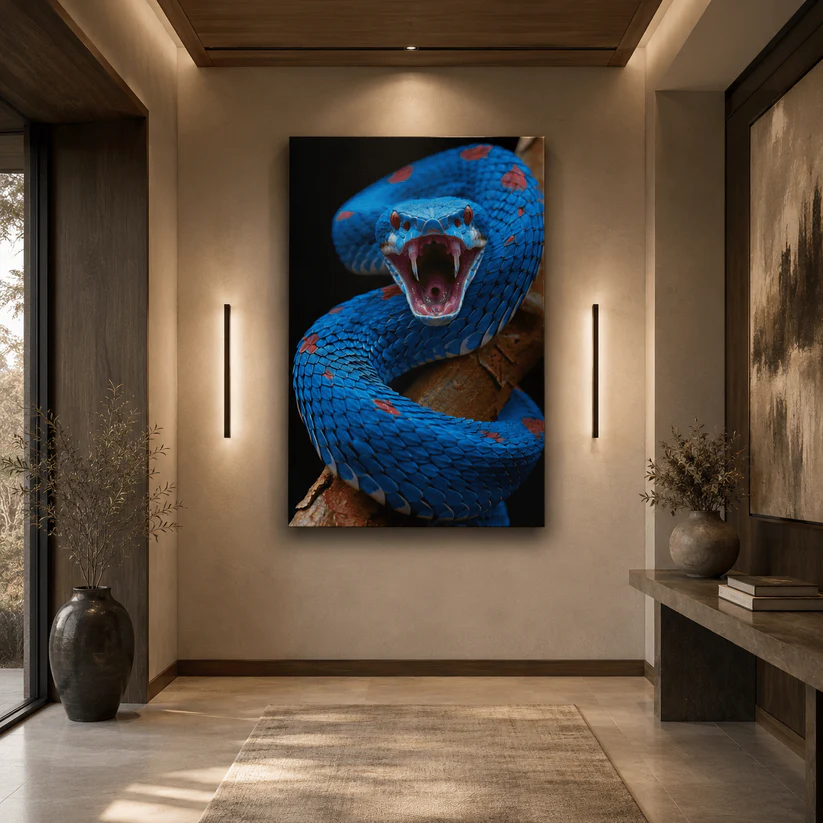
Azure Fury – Electric Blue Viper Close-Up Canvas Wall Art
This electric blue viper artwork captures the intensity, color, and mystery of snake-inspired decor. It is perfect for reptile rooms, modern offices, gaming spaces, and bold wildlife home decor.
Styling Tip: Pair with dark walls, warm lighting, black furniture, and terrarium displays for a dramatic gallery wrapped canvas look.
Shop This Artwork
Majestic Snake Canvas Wall Art
This majestic snake canvas print adds movement, symbolism, and strength to wildlife wall art displays. It works beautifully in reptile rooms, man caves, lodge decor, and nature inspired wall art collections.
Styling Tip: Display it above a desk, console table, terrarium wall, or leather sofa to create a powerful focal point.
Shop This Artwork
Emerald Green Python Canvas Wall Art
This emerald green python artwork brings tropical elegance and refined reptile beauty into the home. It is ideal for premium canvas wall art displays, reptile rooms, and biophilic interiors.
Styling Tip: Style with plants, deep green accents, warm lighting, and natural textures for a lush wildlife gallery wall.
Shop This Artwork6. Rosy Boa
Rosy boas are among the most underrated pet snakes. These beautiful boas are generally calm, manageable in size, and relatively easy to care for. They are native to arid regions of the southwestern United States and parts of Mexico, making them well-suited to dry enclosure environments.
Rosy boas move slowly compared to many colubrids and are often comfortable with gentle handling. Their manageable size makes them attractive for reptile keepers who want a boa without the space requirements of larger species.
Rosy Boa Care Basics
- Difficulty: Beginner to intermediate
- Temperament: Calm and slow-moving
- Diet: Frozen-thawed rodents
- Habitat: Dry enclosure with secure hides
- Best for: Owners wanting a gentle boa species
7. Kenyan Sand Boa
Kenyan sand boas are fascinating burrowing snakes known for their unique appearance and secretive behavior. Much of their time is spent hidden beneath substrate, waiting for prey in ambush.
Although they are not always highly visible display snakes, they are generally manageable in size and can be excellent pets for owners who appreciate unusual reptile behavior.
Kenyan Sand Boa Care Basics
- Difficulty: Beginner to intermediate
- Temperament: Generally calm
- Diet: Frozen-thawed rodents
- Habitat: Deep substrate for burrowing
- Best for: Owners interested in unique snake behavior
8. Boa Constrictor
Boa constrictors are powerful, intelligent snakes that can become impressive long-term companions for experienced keepers. While young boas are manageable, adults require significantly more space than corn snakes or ball pythons.
Boas are often calm when properly socialized, but their size demands respect and planning. Before acquiring a boa constrictor, owners should consider enclosure size, feeding requirements, lifespan, and future housing needs.
Boa Constrictor Care Basics
- Difficulty: Intermediate to advanced
- Temperament: Usually calm when handled regularly
- Diet: Appropriately sized frozen-thawed prey
- Habitat: Large secure enclosure with environmental enrichment
- Best for: Experienced keepers with adequate space
9. Children's Python
Children's pythons are small Australian pythons that have become increasingly popular among reptile enthusiasts. They combine many positive traits of larger pythons while remaining compact and manageable.
These snakes are generally hardy, attractive, and easier to house than many larger python species. Their smaller adult size makes them appealing for keepers with limited space.
Children's Python Care Basics
- Difficulty: Beginner to intermediate
- Temperament: Curious and manageable
- Diet: Frozen-thawed rodents
- Habitat: Secure enclosure with temperature gradient
- Best for: Owners wanting a smaller python species
10. Carpet Python
Carpet pythons are beautiful snakes known for their striking patterns and active personalities. Unlike the slower ball python, carpet pythons tend to be more alert and exploratory.
While many become excellent captives, they generally require more confidence and experience than beginner species. Their larger size and active nature make them more suitable for intermediate reptile keepers.
Carpet Python Care Basics
- Difficulty: Intermediate
- Temperament: Active and alert
- Diet: Frozen-thawed rodents
- Habitat: Spacious enclosure with climbing opportunities
- Best for: Keepers wanting an active python
11. Green Tree Python
Green tree pythons are among the most visually stunning snakes in the reptile hobby. Their vibrant green coloration, arboreal lifestyle, and elegant resting posture make them incredible display animals.
However, green tree pythons are not beginner snakes. They require specialized husbandry, careful environmental control, and advanced reptile keeping knowledge.
Green Tree Python Care Basics
- Difficulty: Advanced
- Temperament: Defensive compared to beginner species
- Diet: Frozen-thawed rodents
- Habitat: Carefully managed arboreal enclosure
- Best for: Experienced reptile keepers
Best Pet Snakes for Beginners
Most new reptile keepers should focus on species that are hardy, manageable, reliable feeders, and forgiving of minor husbandry mistakes.
| Category | Best Choice |
|---|---|
| Best overall beginner snake | Corn Snake |
| Calmest beginner snake | Ball Python |
| Best colorful beginner snake | Milk Snake |
| Best beginner boa | Rosy Boa |
| Best small snake | Hognose Snake or Kenyan Sand Boa |
Which Snakes Are Best for Handling?
Some snakes tolerate handling better than others. Species known for calm dispositions generally make better choices for owners who want regular interaction.
- Excellent handling snakes: Ball python, corn snake, rosy boa
- Moderate handling snakes: Milk snake, kingsnake, children's python
- Experienced handling recommended: Boa constrictor, carpet python
- Mostly display-focused: Green tree python
Snake Lifespan Comparison
| Snake Species | Potential Lifespan |
|---|---|
| Corn Snake | 15–20+ years |
| Ball Python | 20–30+ years |
| Kingsnake | 15–20+ years |
| Boa Constrictor | 20–30+ years |
Common Snake Care Mistakes
- Using an enclosure that is not escape-proof.
- Incorrect temperature gradients.
- Poor humidity management.
- Handling immediately after feeding.
- Overfeeding leading to obesity.
- Using incorrect substrate.
- Insufficient hiding spots.
- Failing to research adult size before purchase.
Creating a Snake-Themed Wildlife Space
Snake enthusiasts often enjoy creating wildlife-inspired spaces that celebrate reptiles and nature. Premium wildlife canvas wall art can transform a reptile room, office, living room, or cabin retreat into a sophisticated wildlife gallery.
Snake-themed decor pairs beautifully with nature inspired wall art, animal canvas wall art, rustic wildlife wall art, forest wildlife art, premium canvas wall art, and gallery wrapped canvas collections. Wildlife home decor featuring reptiles creates a bold focal point while showcasing appreciation for exotic animals.
Related ArtOfRoyals Collections
- Reptiles Canvas Wall Art Collection
- Animals Canvas Wall Art Collection
- Chameleon Canvas Wall Art Collection
- Iguana Canvas Wall Art Collection
- Lizard Canvas Wall Art Collection
- Nature Canvas Wall Art Collection
Final Verdict: Which Pet Snake Should You Choose?
If you are completely new to reptiles, a corn snake is often the safest recommendation because it combines manageable care, active behavior, reliable feeding, and excellent temperament. Ball pythons are perfect for owners who prefer calm, slow-moving snakes and do not mind monitoring humidity more carefully.
Milk snakes and kingsnakes offer beautiful colors and active personalities. Rosy boas provide a gentle boa experience without requiring enormous enclosures. More advanced keepers may enjoy boa constrictors, carpet pythons, or green tree pythons depending on their goals and experience.
The best pet snake is not necessarily the rarest or most expensive snake—it is the species whose care requirements match your lifestyle, space, experience, and long-term commitment.
Frequently Asked Questions About Pet Snakes
What is the easiest pet snake for beginners?
Corn snakes are often considered the easiest pet snakes for beginners because they are hardy, active, manageable, and generally reliable feeders.
What is the calmest pet snake?
Ball pythons are widely known for their calm and gentle nature, making them popular among new snake owners.
Do pet snakes recognize their owners?
Snakes may recognize routines, scents, and handling patterns, but they do not form relationships in the same way that mammals do.
What snake is best for handling?
Ball pythons, corn snakes, and rosy boas are among the best snakes for regular gentle handling.
Are snakes difficult to care for?
Many beginner snake species are relatively straightforward to care for when provided with proper heating, humidity, enclosure security, water, and appropriate feeding.
Do pet snakes need live food?
Most captive pet snakes can thrive on appropriately sized frozen-thawed prey, which is commonly recommended for safety and convenience.
Which pet snake stays small?
Hognose snakes, Kenyan sand boas, and some rosy boas generally remain smaller than many python and boa species.
Which pet snake lives the longest?
Ball pythons and boa constrictors can often live 20–30 years or more with proper care.


