


Reptile Habitat Essentials: Complete Beginner Guide to Reptile Enclosure Setup
A healthy reptile starts with a healthy habitat. Whether you are caring for a leopard gecko, bearded dragon, corn snake, ball python, crested gecko, chameleon, iguana, or another pet reptile, the enclosure is much more than a display tank. It is the animal’s climate system, shelter, feeding space, exercise area, security zone, and miniature ecosystem.
Many beginner reptile problems come from poor habitat setup. Incorrect temperatures, weak UVB lighting, low humidity, unsafe substrate, lack of hides, poor ventilation, and small enclosures can quickly affect reptile health. A reptile may look calm on the outside, but if its habitat is wrong, it may struggle with digestion, shedding, hydration, stress, appetite, bone health, and immune function.
This complete guide covers the most important reptile habitat essentials for beginners, including enclosure size, terrarium setup, heating, lighting, humidity, substrate, hides, enrichment, water, cleaning, and species-specific habitat needs.
At ArtOfRoyals, we celebrate the beauty of reptiles and wildlife through premium canvas wall art. If you are designing a reptile room, nature-inspired home office, exotic pet space, or wildlife-themed interior, explore our Reptiles Canvas Wall Art Collection, Chameleon Canvas Wall Art Collection, Iguana Canvas Wall Art Collection, Lizard Canvas Wall Art Collection, Animals Canvas Wall Art Collection, and Nature Canvas Wall Art Collection for artwork that brings the same wild beauty into your home.
What Are the Essential Parts of a Reptile Habitat?
Quick Answer: A proper reptile habitat needs a secure enclosure, correct enclosure size, heating equipment, thermostat, temperature gradient, UVB lighting when required, proper humidity, safe substrate, hides, water access, enrichment, ventilation, and regular cleaning.
Reptiles are ectothermic animals, meaning they rely on external heat sources to regulate body temperature. This makes habitat setup extremely important. A reptile enclosure must allow the animal to warm up, cool down, hide, drink, shed, climb, dig, hunt, rest, and behave naturally.
A beautiful reptile terrarium should also be functional. Decorative choices should support reptile health first. Plants, branches, rocks, caves, moss, water bowls, and background decor can look amazing, but they must be safe, stable, cleanable, and appropriate for the species.
Reptile Habitat Essentials Checklist
Beginner Reptile Enclosure Checklist
- Correct enclosure size for the species
- Secure lid or locking doors
- Proper ventilation
- Warm side and cool side
- Basking area when required
- Thermostat for heating equipment
- Digital thermometers
- Digital hygrometer
- UVB lighting when required
- Safe substrate
- At least two hides
- Water dish or hydration system
- Climbing, digging, or exploring enrichment
- Cleaning supplies
- Species-specific diet and supplements
Choosing the Right Reptile Enclosure
The enclosure is the foundation of reptile habitat setup. The best reptile enclosure depends on the animal’s size, activity level, natural habitat, temperature needs, humidity needs, and behavior.
Common Reptile Enclosure Types
- Glass terrariums: Popular for many beginner reptiles and easy to view.
- PVC enclosures: Good for retaining heat and humidity.
- Wood vivariums: Useful for custom builds and larger reptiles.
- Screen enclosures: Often used for chameleons because they need strong airflow.
- Bioactive enclosures: Naturalistic setups with live plants, cleanup crews, and soil layers.
Glass tanks are common, but they are not automatically best for every reptile. A tropical reptile may need humidity retention. A chameleon may need airflow. A snake may need a highly secure enclosure. A large lizard may need a custom habitat with enough floor space.
Reptile Enclosure Size Guide
One of the biggest reptile habitat mistakes is choosing an enclosure that is too small. Reptiles need room to move, thermoregulate, hide, climb, explore, and exercise. A small enclosure can cause stress, obesity, weak muscles, poor enrichment, and difficulty maintaining temperature gradients.
| Reptile | Habitat Type | Space Priority | Beginner Note |
|---|---|---|---|
| Leopard Gecko | Terrestrial | Floor space | Needs warm hide, cool hide, and humid hide. |
| Bearded Dragon | Terrestrial / semi-arboreal | Large floor space and basking area | Needs strong heat and UVB lighting. |
| Corn Snake | Terrestrial / climbing | Secure horizontal space | Needs escape-proof enclosure. |
| Ball Python | Terrestrial | Security and humidity | Needs snug hides and stable humidity. |
| Crested Gecko | Arboreal | Vertical climbing space | Needs branches, vines, and foliage. |
| Chameleon | Arboreal | Vertical space and airflow | Advanced setup with misting, UVB, and ventilation. |
Temperature Gradients: The Heart of Reptile Habitat Setup
Temperature control is one of the most important reptile habitat essentials. Reptiles need a temperature gradient, which means one side of the enclosure is warmer and the other side is cooler. This allows the reptile to move around and regulate its own body temperature.
Quick Answer: A reptile habitat should usually have a warm side, cool side, and species-specific basking zone. The exact temperatures depend on the reptile species, so research your animal before setting up the enclosure.
Essential Heating Equipment
- Heat lamp: Provides overhead warmth and basking heat.
- Ceramic heat emitter: Produces heat without visible light.
- Deep heat projector: Provides penetrating heat for some setups.
- Under-tank heater: Used for some species but must be controlled by thermostat.
- Thermostat: Controls heat output and prevents overheating.
- Digital thermometer: Measures air temperature.
- Infrared temperature gun: Measures surface temperature.
Why Thermostats Matter
A thermostat is not optional for most reptile heating setups. Heat sources can become dangerous without regulation. Burns, overheating, dehydration, and stress can happen when heat equipment is not controlled properly.
For beginner reptile owners, one of the safest habits is to test the entire enclosure before bringing the reptile home. Let the habitat run for several days, check temperatures at different times, and adjust heating before the animal arrives.
UVB Lighting: Essential for Many Reptiles
UVB lighting is critical for many reptiles, especially diurnal lizards such as bearded dragons, chameleons, and iguanas. UVB helps reptiles synthesize vitamin D3, which supports calcium metabolism and bone health.
Without proper UVB lighting, some reptiles can develop metabolic bone disease, a serious condition that may cause weak bones, deformities, tremors, pain, and long-term health issues.
Common UVB Lighting Mistakes
- Using a bulb that is too weak
- Placing UVB too far from the basking area
- Blocking UVB with glass or plastic
- Not replacing UVB bulbs on schedule
- Using the same UVB setup for every reptile species
- Providing UVB without proper calcium supplementation
Which Reptiles Need UVB?
Bearded dragons, iguanas, many turtles, tortoises, and chameleons generally need UVB lighting. Some geckos and snakes may have lower UVB needs depending on species and setup, but many keepers still use low-level UVB to support natural light cycles.
Lighting should always be researched by species. A desert lizard and a tropical gecko do not need the same UVB intensity.
Humidity: Creating the Right Moisture Balance
Humidity is another major part of reptile habitat setup. Too little humidity can cause dehydration and shedding problems. Too much humidity can lead to mold, bacteria, poor ventilation, and respiratory issues depending on the species.
The right humidity level depends on where the reptile comes from naturally. Desert reptiles, tropical reptiles, forest reptiles, and grassland reptiles all have different moisture needs.
| Habitat Style | Common Reptiles | Humidity Focus |
|---|---|---|
| Dry / arid habitat | Bearded dragons, leopard geckos | Avoid constant dampness; provide hydration and humid hide when needed. |
| Tropical habitat | Crested geckos, chameleons | Humidity cycles, misting, foliage, and airflow are important. |
| Moderate humidity habitat | Ball pythons, corn snakes | Stable humidity helps hydration and healthy shedding. |
Tools for Humidity Control
- Digital hygrometer
- Misting bottle
- Automatic misting system
- Fogger for selected tropical setups
- Moisture-retaining substrate
- Humid hide
- Ventilation adjustments
Substrate: Choosing the Right Reptile Bedding
Substrate is the material that lines the bottom of the reptile enclosure. It affects cleanliness, humidity, digging behavior, odor control, safety, and overall habitat appearance.
Common Reptile Substrate Options
- Paper towels: Simple, clean, and useful for quarantine or young reptiles.
- Reptile carpet: Reusable but must be cleaned carefully and may trap bacteria.
- Tile: Easy to clean and useful for some arid enclosures.
- Coconut fiber: Helps retain humidity for tropical or moderate humidity setups.
- Cypress mulch: Often used for humidity-loving reptiles.
- Bioactive soil mix: Used in naturalistic planted vivariums.
- Sand mixes: Must be researched carefully and used only when appropriate.
Unsafe substrate can create health risks. Some loose substrates may contribute to impaction if husbandry is poor or if the reptile eats substrate while feeding. Dusty, moldy, sharp, or chemically treated substrates should be avoided.
Hides: Security Is Not Optional
Reptiles need hides because hiding is a natural survival behavior. A reptile without proper hiding spots may feel exposed, stressed, and unsafe. Stress can affect appetite, shedding, immune function, and activity.
How Many Hides Does a Reptile Need?
Most reptiles should have at least two hides: one on the warm side and one on the cool side. Many species also benefit from a humid hide, especially during shedding.
- Warm hide: Lets the reptile feel secure while staying warm.
- Cool hide: Lets the reptile rest away from heat.
- Humid hide: Supports hydration and shedding.
- Elevated hides: Useful for climbing species.
Featured Reptile Artwork for Habitat Rooms and Nature-Inspired Interiors
A reptile habitat can become the centerpiece of a beautiful wildlife-inspired room. Reptile wall art adds visual depth, personality, and a gallery-style nature theme around the enclosure. Snake canvas prints, chameleon artwork, and exotic reptile canvas wall art work especially well in reptile rooms, home offices, gaming rooms, man caves, and modern nature-inspired interiors.
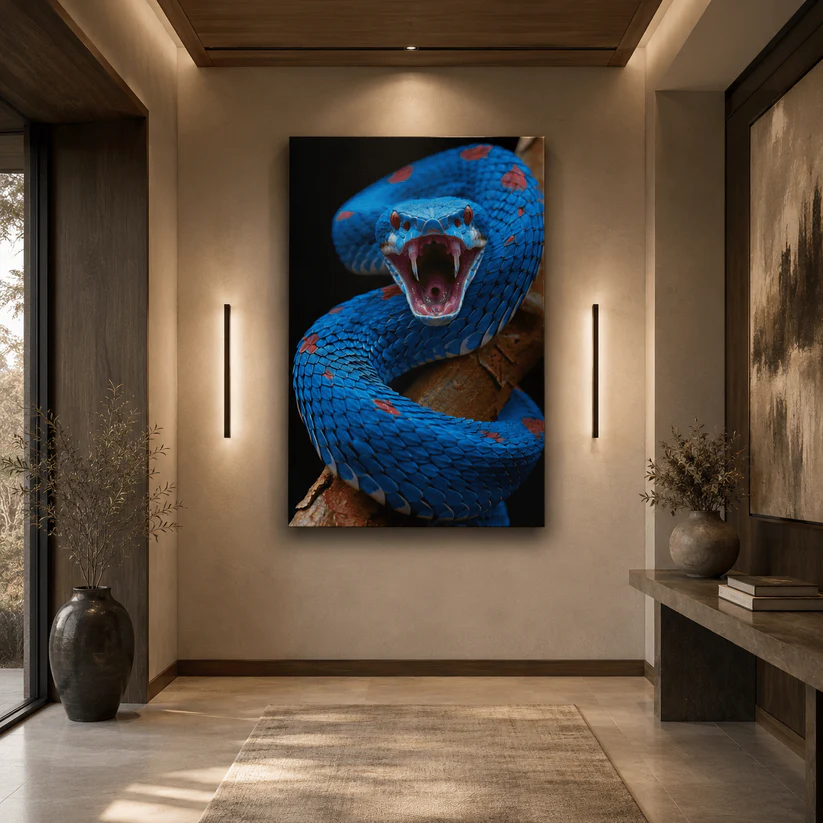
Azure Fury – Electric Blue Viper Close-Up Canvas Wall Art
This bold electric blue viper artwork brings exotic reptile energy into modern interiors. It is ideal for reptile rooms, gaming spaces, wildlife offices, and bold masculine decor.
Styling Tip: Pair with dark green walls, black shelving, terrarium lighting, and natural wood accents.
Shop This Artwork
Majestic Snake Canvas Wall Art
This majestic snake canvas print adds movement, mystery, and strength to a reptile-themed space. It works beautifully near terrarium displays, office desks, and modern living rooms.
Styling Tip: Use it as a statement piece above a reptile enclosure wall, console table, or reading corner.
Shop This Artwork
Emerald Green Python Canvas Wall Art
This emerald green python artwork adds a lush tropical mood to reptile rooms and nature-inspired interiors. Its rich color palette pairs well with plants, wood, and warm lighting.
Styling Tip: Style it with live plants, terrarium shelving, and earthy textures for a biophilic design feel.
Shop This ArtworkWater and Hydration Essentials
Clean water is one of the most basic reptile habitat essentials, but hydration needs vary by species. Some reptiles drink from a bowl, some lick droplets from leaves, and some need regular misting or humidity cycles to stay properly hydrated.
A leopard gecko may use a shallow water dish. A ball python needs a bowl large enough to support hydration and humidity. A chameleon may ignore standing water and drink from droplets on leaves after misting. A crested gecko may drink from water droplets, a dish, or both.
Reptile Water Setup Tips
- Provide fresh water daily.
- Use a stable, easy-to-clean water dish.
- Keep water away from loose substrate when possible.
- Clean water bowls regularly to prevent bacteria buildup.
- Use misting for species that rely on droplets.
- Never assume every reptile drinks the same way.
Ventilation and Airflow
Good ventilation keeps a reptile enclosure healthier by reducing stale air, excess moisture, mold growth, and odor. However, too much airflow can make it difficult to maintain humidity for tropical reptiles. The goal is balance.
Chameleons are a clear example of why ventilation matters. Many chameleon species need excellent airflow along with humidity cycles. A damp, stagnant enclosure can create health problems. On the other hand, some tropical reptiles need enough humidity retention to shed and hydrate properly.
Signs of Poor Ventilation
- Constant condensation on glass
- Moldy substrate or decor
- Stale smell inside the enclosure
- Humidity that never drops
- Wet surfaces that stay damp all day
Branches, Rocks, Plants, and Climbing Structures
Reptile habitat decor should support natural behavior. Arboreal reptiles need vertical climbing space. Ground-dwelling reptiles need hides, textures, and safe surfaces. Semi-arboreal reptiles may enjoy both floor space and elevated basking spots.
Useful Reptile Enrichment Items
- Branches for climbing reptiles
- Cork bark for hides and texture
- Slate or rock basking platforms
- Artificial or live plants
- Vines for geckos and chameleons
- Digging areas for burrowing species
- Leaf litter for naturalistic habitats
All enclosure decor should be stable. Heavy rocks or branches can injure reptiles if they fall. Items should be cleaned before use and arranged so the reptile cannot get trapped.
Species-Specific Reptile Habitat Setups
Leopard Gecko Habitat Essentials
A leopard gecko habitat should focus on floor space, warmth, security, and shedding support. Leopard geckos are terrestrial, so they do not need a tall enclosure like a crested gecko or chameleon.
- Warm hide
- Cool hide
- Humid hide
- Low to moderate humidity
- Safe substrate
- Shallow water dish
- Gentle enrichment such as cork bark and hides
Bearded Dragon Habitat Essentials
A bearded dragon habitat requires strong lighting, a proper basking zone, spacious floor area, UVB exposure, and safe surfaces. Bearded dragons are active daytime reptiles and benefit from room to move and climb.
- Large enclosure
- Strong basking area
- High-quality UVB lighting
- Warm side and cool side
- Climbing rocks or branches
- Fresh greens feeding area
- Easy-to-clean surfaces
Corn Snake Habitat Essentials
Corn snakes need a secure enclosure because they are skilled escape artists. Their habitat should include hides, climbing opportunities, a water bowl, proper heat gradient, and substrate that allows natural movement.
- Escape-proof enclosure
- Warm hide and cool hide
- Water bowl
- Climbing branches
- Substrate for movement and cover
- Stable temperatures
Ball Python Habitat Essentials
Ball pythons need security, stable temperatures, and proper humidity. They often feel safest in snug hides. A stressed ball python may refuse food, hide constantly, or show defensive behavior.
- Secure enclosure
- Snug warm hide
- Snug cool hide
- Moderate humidity
- Large water bowl
- Substrate that helps humidity control
- Minimal stress and proper cover
Crested Gecko Habitat Essentials
Crested geckos are arboreal reptiles that need vertical climbing space. Their habitat should include branches, vines, foliage, and humidity cycles. They are often active in the evening and at night.
- Vertical enclosure
- Branches and vines
- Dense foliage
- Moderate humidity cycles
- Good ventilation
- Crested gecko diet feeding ledge
- Safe hiding areas above ground
Chameleon Habitat Essentials
Chameleons are advanced reptiles with very specific habitat needs. They need vertical space, airflow, UVB lighting, misting, foliage, and low-stress environments. Most chameleons do not enjoy frequent handling.
- Screen or well-ventilated enclosure
- Vertical climbing space
- Branches at different levels
- Live or artificial foliage
- UVB lighting
- Basking zone
- Misting or dripper system
- Careful humidity control
Featured Chameleon Artwork for Tropical Reptile Spaces

Enigmatic Chameleon Canvas Wall Art
This chameleon canvas artwork brings tropical color, exotic wildlife beauty, and rainforest-inspired energy into reptile rooms, home offices, living rooms, and nature-themed interiors.
Styling Tip: Pair it with lush plants, warm terrarium lighting, wood furniture, and green accent decor for a complete tropical reptile room look.
Shop This ArtworkReptile Habitat Cleaning and Maintenance
A clean habitat protects reptile health. Waste, uneaten food, dirty water, mold, and bacteria can build up quickly if the enclosure is not maintained. Cleaning routines depend on the species, enclosure type, substrate, and humidity level.
| Task | Daily | Weekly | Monthly |
|---|---|---|---|
| Check temperature | Yes | Yes | Yes |
| Check humidity | Yes | Yes | Yes |
| Replace water | Yes | Yes | Yes |
| Remove waste | As needed | Yes | Yes |
| Clean decor and hides | As needed | Yes | Yes |
| Deep clean enclosure | No | As needed | Yes |
Common Reptile Habitat Mistakes to Avoid
- Using an enclosure that is too small: Reptiles need room to move, hide, and thermoregulate.
- No thermostat: Unregulated heat sources can become dangerous.
- Wrong humidity: Poor humidity can cause shedding, hydration, or respiratory issues.
- No temperature gradient: Reptiles need warm and cool zones.
- Weak or missing UVB: Many lizards need UVB for calcium metabolism.
- Unsafe decor: Heavy or unstable items can fall and injure reptiles.
- Poor ventilation: Stagnant damp air can encourage mold and bacteria.
- No hides: Reptiles need secure places to feel safe.
Designing a Reptile Room at Home
A reptile room can be both practical and beautiful. Start with safe shelving, stable enclosure stands, good electrical organization, proper ventilation, and easy access for feeding and cleaning. Then build the visual atmosphere with plants, wood textures, warm lighting, dark green walls, natural stone accents, and reptile-inspired artwork.
Reptile canvas wall art can help connect the room visually. A snake print above a terrarium shelf, a chameleon canvas near a planted enclosure, or an emerald python artwork in a tropical reptile room can turn the space into a true wildlife-inspired interior.
Related ArtOfRoyals Wildlife Collections
- Reptiles Canvas Wall Art Collection
- Chameleon Canvas Wall Art Collection
- Iguana Canvas Wall Art Collection
- Lizard Canvas Wall Art Collection
- Animals Canvas Wall Art Collection
- Nature Canvas Wall Art Collection
- Wildlife Canvas Wall Art Collection
Why Choose ArtOfRoyals for Reptile and Wildlife Wall Art?
ArtOfRoyals creates premium wildlife canvas wall art for people who want their spaces to feel bold, natural, and meaningful. Our reptile-themed artwork is designed for reptile keepers, exotic animal lovers, nature enthusiasts, wildlife collectors, and homeowners who want gallery-inspired animal wall decor.
- Premium reptile, animal, and wildlife canvas wall art
- Bold artwork for reptile rooms, offices, living rooms, and modern interiors
- Nature-inspired canvas prints for collectors and wildlife lovers
- Strong statement pieces for masculine, rustic, tropical, and biophilic spaces
- Curated collections for snakes, chameleons, iguanas, lizards, animals, and nature decor
Final Thoughts: A Better Habitat Means a Healthier Reptile
Reptile habitat essentials are not just accessories. They are the foundation of reptile health. A proper enclosure gives your reptile the ability to regulate temperature, hide securely, stay hydrated, shed successfully, move naturally, and live with less stress.
Before bringing home any reptile, build the habitat first. Test the heating, lighting, humidity, hides, ventilation, water access, and enclosure security. When the environment is correct, the reptile has a much better chance to thrive.
And once your reptile’s habitat is healthy and functional, you can design the surrounding space to reflect your love of wildlife. With premium reptile canvas wall art, natural textures, plants, and thoughtful decor, your reptile room can become a beautiful celebration of nature inside your home.
Frequently Asked Questions About Reptile Habitat Essentials
What does every reptile habitat need?
Every reptile habitat needs a secure enclosure, correct temperature gradient, proper humidity, hides, water access, safe substrate, ventilation, and species-specific lighting and enrichment.
Do reptiles need a heat lamp?
Many reptiles need a heat lamp or another safe heat source, but the best heating method depends on the species. All heat sources should be controlled with a thermostat when appropriate.
Do reptiles need UVB lighting?
Many lizards, turtles, and tortoises need UVB lighting. Bearded dragons, chameleons, and iguanas usually require UVB. Some snakes and nocturnal geckos may have different needs.
How many hides should a reptile have?
Most reptiles should have at least two hides: one on the warm side and one on the cool side. Many species also benefit from a humid hide.
What is the best substrate for reptiles?
The best substrate depends on the species. Paper towels, tile, coconut fiber, cypress mulch, bioactive soil mixes, and other substrates can be appropriate depending on humidity, behavior, and safety needs.
How do I control humidity in a reptile enclosure?
You can control humidity with substrate choice, misting, water bowl placement, ventilation, humid hides, foggers, or automatic misting systems depending on the species.
Can reptile enclosures be decorated?
Yes, reptile enclosures can be decorated with branches, plants, rocks, cork bark, vines, and hides, but all decor must be safe, stable, cleanable, and appropriate for the reptile.
How often should I clean a reptile habitat?
Water should be refreshed often, waste should be removed regularly, and deeper cleaning should be done based on species, substrate, enclosure type, and humidity level.
What is a temperature gradient?
A temperature gradient means the enclosure has a warm side and a cool side so the reptile can move between areas and regulate its body temperature.
Can I keep different reptiles in the same enclosure?
Most reptiles should not be housed together, especially different species. Cohabitation can cause stress, injury, disease transmission, competition, and feeding problems.


