


How Wildlife Artists Inspire Modern Decor: The Principles Behind the Canvas
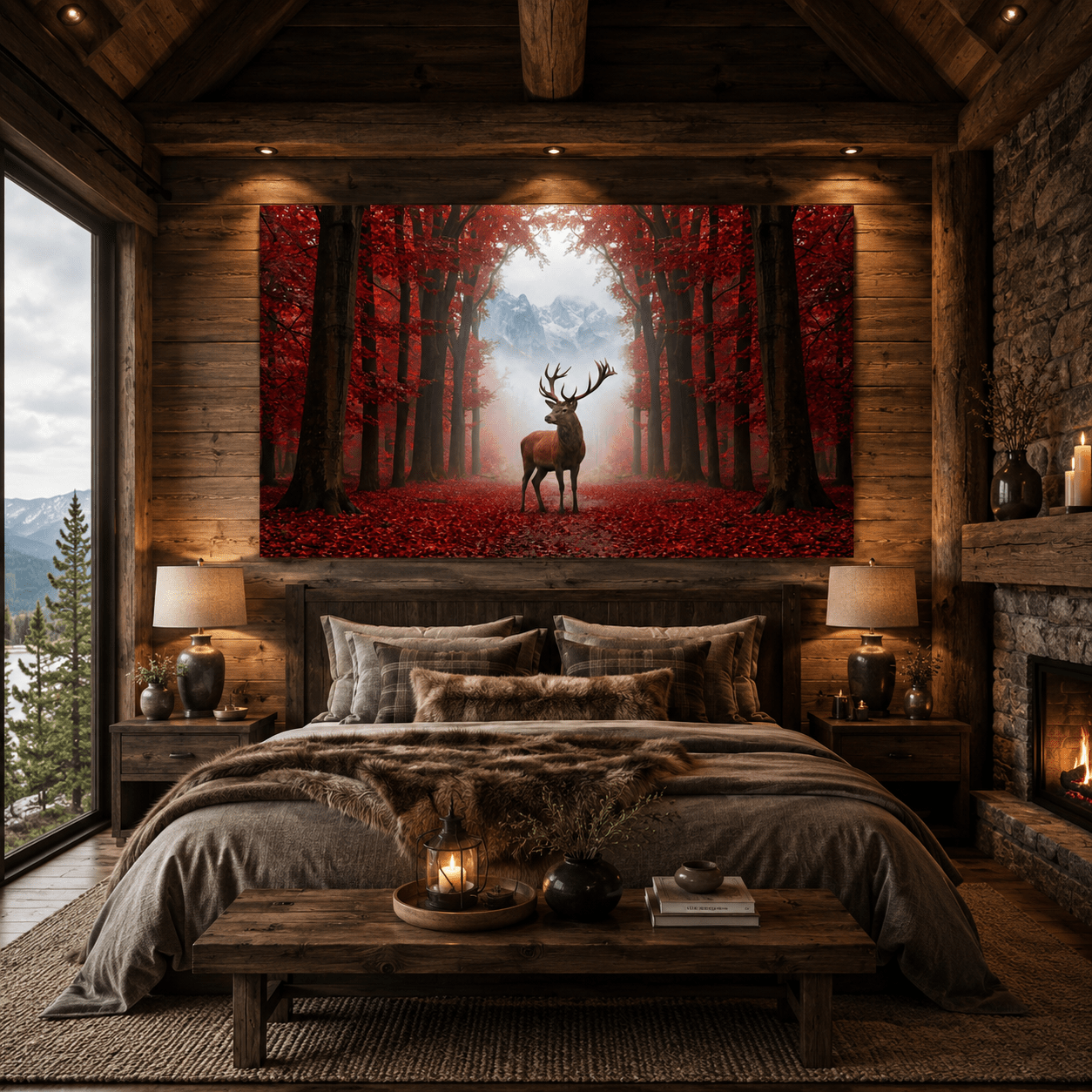
Interior designers who work with wildlife art will tell you something that surprises most homeowners: the decisions that make a wildlife canvas work in a room — which wall, which scale, which palette, which subject — are the same decisions the artist made when creating the piece. The painter chose where the light falls. The decorator decides where the light in the room will meet the canvas. The painter chose a dark, forested background to make the stag's form luminous. The decorator chooses a wall color and lighting scheme that lets that luminosity carry across the room.
Great wildlife art and great interior design are in conversation. Understanding what wildlife artists were doing — why they made the compositional and tonal choices they made — gives anyone decorating with wildlife canvas prints a fundamentally better set of tools for making those choices in their own home.
This article explores the specific principles that the most celebrated wildlife artists established, and translates each one into practical, actionable guidance for decorating with premium wildlife canvas art in modern homes. Whether you're anchoring an open concept living room, styling a cabin great room, or choosing a statement piece for a luxury interior, the principles are the same ones Rungius and Thorburn worked with — just applied to your walls rather than their canvases.
Principle 1: The Tonal Anchor — How Dark Backgrounds Command a Room
One of the most consistent choices in the history of great wildlife painting is the dark background. Archibald Thorburn's birds emerge from deep forest shadow. Bruno Liljefors's foxes materialize from the half-light at the edge of a pine forest. Contemporary wildlife painters working in the tradition of atmospheric realism almost universally reach for depth and darkness in their backgrounds — not because darkness is inherently dramatic, but because contrast is what makes a subject visible and what gives a painting its sense of inhabited space.
In interior design terms, this translates into one of the most powerful tools available to anyone decorating with wildlife canvas art: the tonal anchor. A wildlife canvas with a rich, deeply saturated dark background becomes the room's visual center of gravity. Every other element in the room — furniture, textiles, secondary objects — is perceived in relation to that anchor. The room organizes itself around the canvas in the same way the painter's composition organized itself around the light-catching subject against the dark ground.
This is precisely why dark-palette wildlife prints — a wolf against a midnight blue sky, a stag emerging from deep forest shadow, an eagle against storm-dark water — work so powerfully in living rooms, home offices, and cabin great rooms. They are not just beautiful. They are structurally functional: they give the room the visual hierarchy it needs to feel complete. For more on how this principle applies in open concept spaces specifically, our guide on wildlife canvas prints for open concept homes explores the tonal anchor role in detail.
Applying the Tonal Anchor in Your Home
- Living room feature wall: Choose a canvas with a dark, atmospheric background for the primary feature wall. The contrast with lighter walls and furnishings creates immediate visual authority.
- Fireplace wall: A dark-palette wildlife canvas above a fireplace mirrors the tonal quality of the fire itself — warm light against dark surround — creating visual and atmospheric coherence.
- Home office or library: Dark backgrounds reinforce the contemplative quality these rooms call for. A wolf or raven canvas in a deep forest or night setting is exactly right for a thinking space.
Principle 2: The Horizon Line — How Artists Create Depth and Space
Carl Rungius, the master of North American big game painting, almost always positioned his subjects with a strong, clear horizon — mountain ridgelines, lakeshores, treelines — that established both the scale of the landscape and the animal's place within it. That horizon line did something compositionally essential: it created depth, recession into the picture plane, the sense that the world of the painting extends beyond its edges.
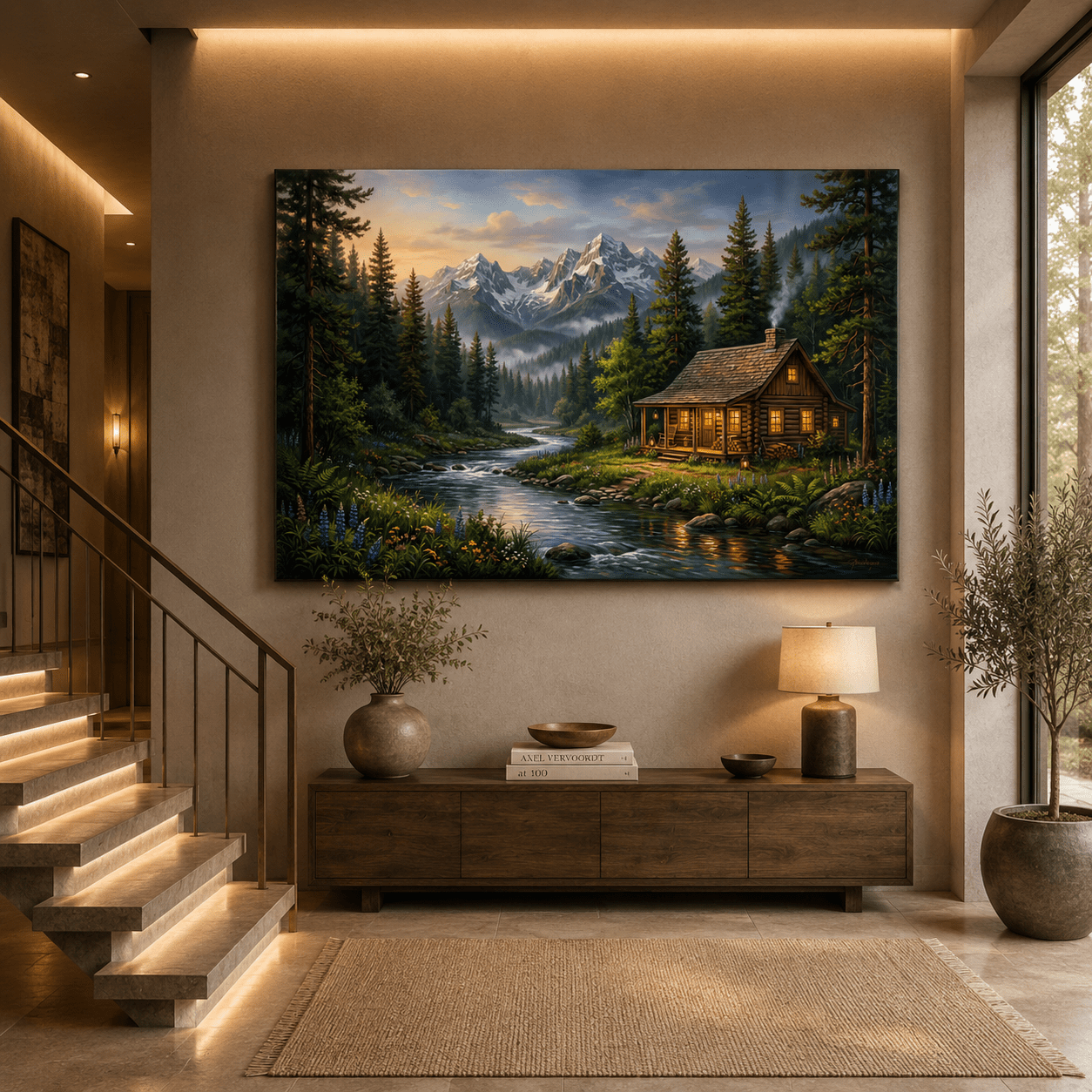
For interior designers, this translates into a crucial principle about which wildlife canvases work in which rooms. A canvas with a deep horizon — a moose at a mountain lake with the ridgeline in the distance, a stag in an autumn meadow with forest receding behind it — creates a visual expansion effect in a room. The viewer's eye travels into the painting and perceives space beyond the wall. In smaller rooms, this creates a breathing room effect that tight, close-cropped compositions cannot provide. In large open concept spaces, it gives the feature wall a sense of landscape scale that matches the room's own generous proportions.
This horizon principle is also why landscape-forward wildlife canvases work so well in dining areas and bedrooms — spaces where you spend extended time in a single position, looking at the same wall. A canvas with depth and a clear recession line rewards extended viewing in a way that a tight portrait composition does not. Our wilderness landscape art collection has particularly strong examples of this horizon-depth quality for dining and bedroom applications.
Horizon Line Choices by Room
| Room | Best Horizon Treatment | Why It Works |
|---|---|---|
| Open concept living room | Wide panoramic horizon | Matches the scale of the open floor plan |
| Dining area | Mid-depth landscape recession | Rewards extended seated viewing |
| Bedroom | Soft, atmospheric depth | Creates restful visual extension |
| Entryway | Close or portrait format | Immediate impact at short viewing distance |
| Home office | Medium depth, single subject | Focused without demanding attention |
| Staircase | Vertical with upward movement | Reinforces the directional quality of stairs |
Principle 3: The Inhabited Setting — Why Subject-Environment Integration Matters
The single most consistent marker that separates great wildlife art from mediocre wildlife art is whether the animal looks like it actually lives in the setting it's painted within. A wolf against a generic dark gradient is a wolf illustration. A wolf at the edge of a frozen river in winter light, its breath visible, its posture specific to the way wolves hold themselves in cold — that is wildlife art. The difference is not just aesthetic. It's the difference between a decorative object and a piece of art that carries genuine presence.
In interior design, this principle translates into a clear instruction: choose wildlife canvases where the animal and its setting are in genuine dialogue, not canvases where an animal has been dropped onto a background as an afterthought. The integrated setting is what creates the biophilic connection — the sense that looking at the canvas gives you something of the experience of being in that landscape.
Research from Terrapin Bright Green's authoritative biophilic design research identifies "nature imagery" as one of the most effective biophilic interventions in built environments — but qualifies this by noting that effective nature imagery requires genuine environmental complexity, not simplified or stylized representations. A wolf canvas with a rich, atmospherically complete forest or wilderness setting provides that complexity. A wolf on a plain background does not. The distinction is exactly the one Thorburn, Liljefors, and Rungius were making in their studios a century ago.
For cabin and lodge interiors specifically, this principle is essential. The goal of cabin decor is almost always to make the home feel like an extension of the surrounding landscape — and wildlife canvases where the animal is genuinely embedded in that landscape reinforce this feeling powerfully. Read our guide on wildlife wall decor ideas for mountain cabins for specific placement and subject recommendations that apply this principle room by room.
Principle 4: Scale as Respect — Why Size Is an Artistic Statement
John James Audubon printed his birds at life size. Not because it was practical — it made the books enormous and expensive — but because he believed that depicting a bird at less than its actual scale was a form of diminishment, a failure to honor the animal's reality. His life-size great blue heron stands 46 inches tall in the plate. His bald eagle spreads wings that require you to step back from the page.
This insistence on scale as a form of respect for the subject has a direct and practical translation for interior design: the canvas you choose for a primary wall should be large enough to command that wall with genuine authority. A 24x36 inch wolf canvas on a 10-foot living room wall is not respecting the subject. It is diminishing it. The animal deserves to be seen at a scale that communicates its actual presence in the world.
For open concept floor plans — where the primary feature wall is often visible from the kitchen, the dining area, and the entry simultaneously — the canvas scale needs to carry across 15 to 20 feet of open space. At that distance, a 36x48 canvas reads as medium-sized. A 48x72 canvas reads as a statement. This is the Audubon principle applied to modern residential scale: give the subject the space it deserves, and the room will organize itself accordingly.
The practical guidance for achieving this in different rooms is covered in our dedicated wildlife art placement and size guides. And for those specifically designing hunting lodge and sporting retreat interiors where the scale principle is particularly important, our resource on best wildlife canvas prints for hunting lodge decor applies these principles to that specific context.
Principle 5: The Emotional Vocabulary — Choosing Subjects by the Feeling They Create
Wildlife artists understood that different animals produce different emotional responses — not because of sentimentality, but because of the genuine qualities those animals embody. The wolf's intelligence and social complexity. The stag's combination of power and grace. The eagle's command of space. The owl's association with stillness and night. These are not invented meanings — they emerge from the actual characteristics of the animals and have been recognized across cultures and centuries because they are real.
Interior designers who understand this use wildlife art subject selection the way a novelist uses character: to establish the emotional register of a space. A living room with a wolf canvas says something different from a living room with a stag canvas — not more or less sophisticated, but emotionally distinct. The wolf brings intensity and watchfulness. The stag brings majesty and seasonal beauty. The choice should align with what you want the room to feel like.
This emotional vocabulary principle is the reason why stag wall art is trending in luxury masculine interiors — the stag's combination of authority, elegance, and seasonal richness speaks directly to the aesthetic values of those spaces. It is also why wolf art dominates in dramatic, intensity-forward living rooms, why eagle art works across a wider range of spaces than almost any other subject, and why moose art is so specifically powerful in cabin and mountain home settings where the animal's habitat directly mirrors the home's surroundings.
For a definitive reference on the emotional and symbolic registers of different wildlife art subjects, our comprehensive resource on wildlife and animal prints across all subjects gives you the full range to compare. And for the stag specifically, the guide on big buck canvas art as a statement piece explores the emotional and decorative case in detail.
Principle 6: The Palette Bridge — Connecting Art to Architecture
Every interior designer working with art in a room has to solve the same problem: how do you connect the world of the artwork to the world of the room? The furniture, the walls, the textiles, the architectural finishes — all of these have their own palette and their own material character. The canvas brings a different world. The skill is making those two worlds feel like they belong together without making the art look like it was chosen to match the sofa.
Wildlife artists solve this problem through palette. The earthy, natural palette of great wildlife painting — forest greens, autumn ambers, winter blues, warm ochres, cool slate grays — corresponds almost exactly to the natural material palette of the interiors that wildlife art most naturally inhabits: wood, stone, leather, linen, wool. This is not a coincidence. Both the artists and the architects were drawing from the same source: the colors of the natural world.
The practical instruction: choose a wildlife canvas whose background palette shares at least two color relationships with your room's existing materials. A cabin with dark wood beams and a stone fireplace should receive a canvas whose background contains deep greens, warm browns, or cool grays — the same palette that wood and stone already occupy. A modern rustic interior with warm amber leather and natural linen needs a canvas whose autumn or golden-hour wilderness palette echoes those tones.
This palette bridge principle is what separates wildlife canvas choices that feel inevitably right from those that feel slightly forced. It also explains why certain subjects — like a fox in autumn woodland or a stag in golden forest light — work beautifully in farmhouse and transitional interiors that darker subjects would overpower. For specific guidance on this principle applied to farmhouse styling, our rustic deer wall art ideas for farmhouse homes shows exactly how the palette bridge works in practice. And for log home and timber frame applications, the best wildlife wall art for log homes guide covers the palette relationships specific to that architectural context.
Wildlife Art and Sustainable Design: An Unexpected Connection
One dimension of wildlife art's influence on modern interiors that is increasingly recognized is its relationship to sustainable and eco-conscious design. A home decorated with premium wildlife canvas art — archival prints on responsibly sourced canvas, gallery-wrapped on solid wood, designed to last decades rather than seasons — is participating in a design philosophy that values longevity over trend-chasing and natural subjects over artificial ones.
This connection between wildlife art and eco-conscious interiors is explored in depth in our article on eco-friendly interior design and the role of wildlife wall art. And according to Dezeen's analysis of biophilic design trends, the move toward nature-connected interiors is being driven partly by sustainability consciousness — a recognition that homes should connect to rather than ignore the natural world they exist within.
For small space applications where wildlife art plays a different but equally important role, our guide to maximizing small spaces with wildlife canvas art shows how the principles above apply when scale is constrained and every placement decision carries more weight.
Applying the Principles: A Room-by-Room Summary
Each of the six principles above applies across every room of the home — but the emphasis shifts depending on the space. Here is a practical summary:
- Open concept living room: Tonal anchor (dark-palette statement canvas) + scale principle (40x60 minimum) + panoramic horizon for depth across the floor plan. Browse wolf and dramatic wildlife prints for the strongest tonal anchors.
- Dining area: Horizon depth (mid-recession landscape) + palette bridge (warm earthy tones matching dining textiles) + emotional vocabulary (graceful rather than intense subjects). Our stag and deer art works particularly well here.
- Fireplace wall: Tonal anchor + inhabited setting (animal in its natural wilderness context) + scale respect (canvas filling the visual space above the mantel).
- Entryway: Emotional vocabulary (the first statement about what the home values) + portrait format + close-reading reward (a subject with detail that earns inspection at short range).
- Bedroom: Horizon depth (restful visual extension) + gentle palette bridge + emotional vocabulary calibrated to rest rather than intensity. Landscape and graceful wildlife subjects work best here.
- Home office / library: Tonal anchor + inhabited setting + emotional vocabulary (intelligence and watchfulness — owl, wolf, raven subjects suit this room).
- Cabin great room: All six principles at maximum expression — the room most completely designed around wildlife art as its organizing principle. See our full cabin and rustic wildlife art guides for complete room-by-room coverage.
For those who want to extend these principles into the most challenging application — the open concept home where multiple zones must be visually connected through wildlife art — our dedicated resource on wildlife art for open concept homes is the most specific guide we offer.
Featured ArtOfRoyals Pieces: Each Principle Expressed
Each piece below exemplifies one or more of the six principles discussed above — chosen not just for their beauty but for what they do in a room according to the logic that wildlife artists established.
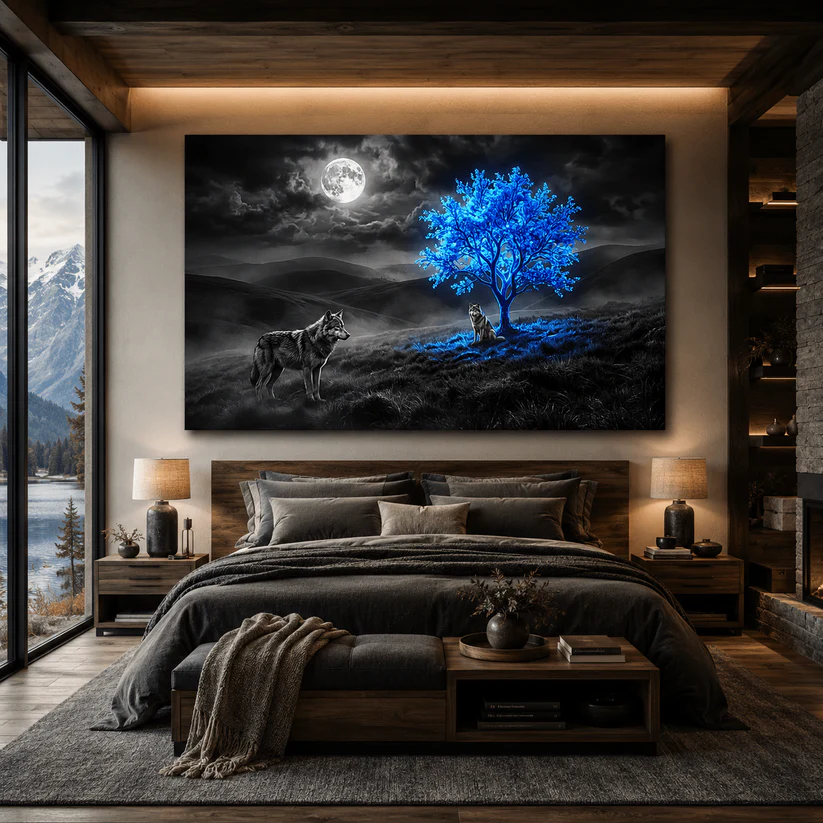
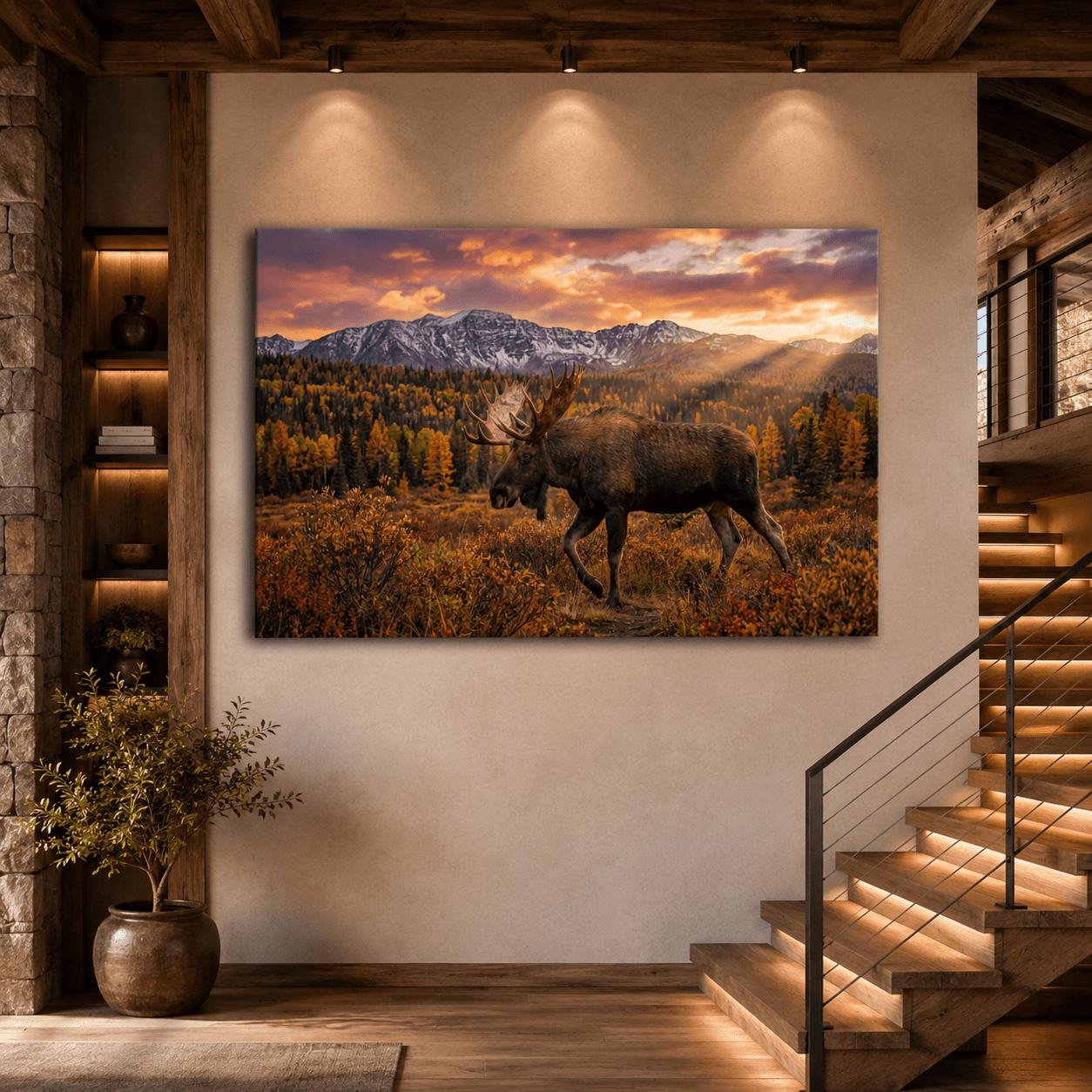
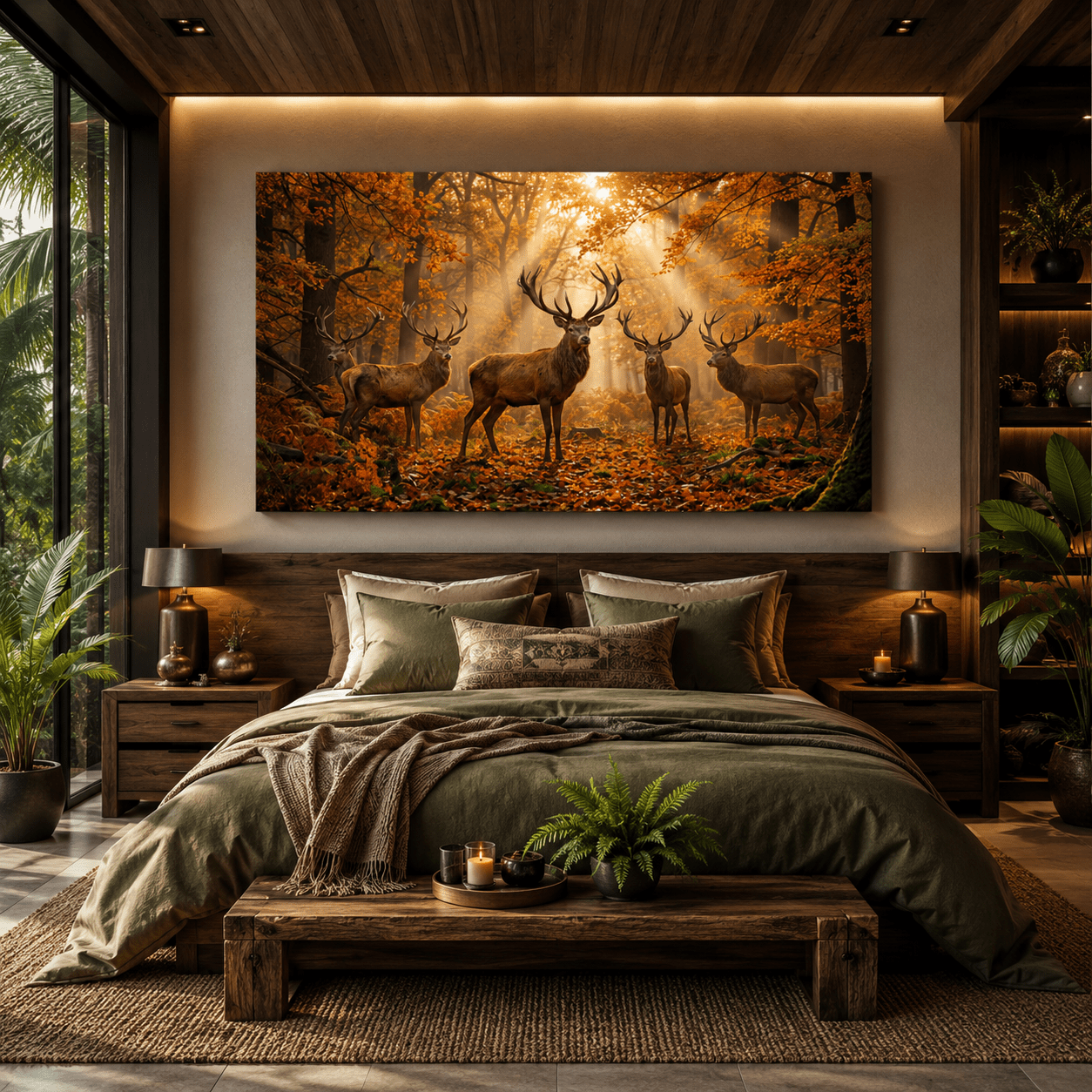
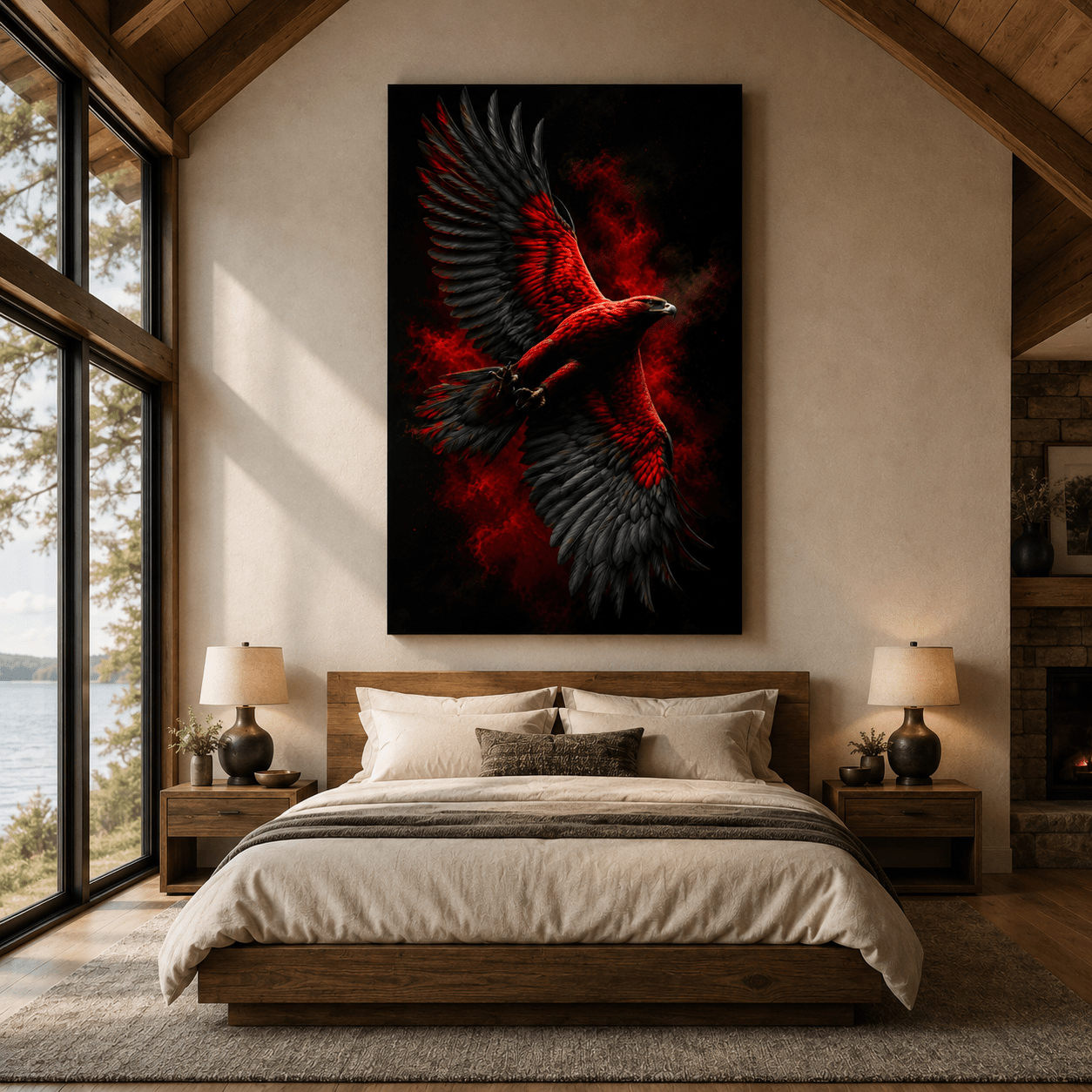
Browse the complete full wildlife canvas collection and our animal and wildlife prints to find pieces that apply these six principles in your specific room. And for whole-home design guidance, our wildlife home decor design guides translate these principles into practical room-by-room plans for every interior style.
Gallery-Wrapped Canvas: The Format the Principles Demand
Every principle discussed in this article — tonal anchor, horizon depth, inhabited setting, scale respect, emotional vocabulary, palette bridge — operates at its highest level when the canvas format does not compete with the image. A frame introduces a stylistic variable that can conflict with the room's palette, date with changing trends, and visually interrupt the relationship between the art and the architecture.
Gallery-wrapped canvas — where the image continues around mirrored edges on solid wood stretcher bars, requiring no frame — removes that competition entirely. The stated dimensions of the canvas are the full visual dimensions. The image is the entire object. At large scale, this creates an effect that approaches the quality of a mural — the wildlife scene appears to exist on rather than within the wall.
All ArtOfRoyals canvases are gallery-wrapped on solid kiln-dried wood frames, printed on museum-quality archival canvas with fade-resistant inks, and arrive with hanging hardware installed. The six principles above require execution quality commensurate with their artistic ambition — and that is what every piece we offer is built to deliver.
According to Architectural Digest's guidance on art display, gallery-wrapped canvas has become the preferred format for residential art display precisely because it eliminates the frame as a design variable, letting the art itself do all the work. In wildlife art specifically, where the image carries such concentrated visual and emotional content, that focus on the image rather than its presentation is exactly right.
Six principles. One wall. Your home transformed.
Every ArtOfRoyals canvas is gallery-wrapped, museum quality, and built to apply these principles in your space from day one. Browse the collection and find the piece that does the right work on the right wall.
Browse the Collection →Frequently Asked Questions: Wildlife Artists and Modern Decor
How do wildlife artists influence interior design trends?
Wildlife artists establish the visual vocabulary — palette, composition, atmospheric treatment — that interior designers translate into room styling choices. When dark, moody wilderness paintings became prominent in galleries, dark-palette wildlife canvas art followed in high-end residential interiors. For specific trend context, our coverage of wildlife art's role in eco-friendly interior design explores one of the most significant current directions.
What artistic principles make wildlife art work well in a room?
The six principles covered in this article — tonal anchor, horizon depth, inhabited setting, scale respect, emotional vocabulary, and palette bridge — are the core framework. Each translates a decision wildlife artists make in the studio into a decision you make about your wall. Applied together, they guarantee choices that work rather than choices that merely look good in a product photo.
How does wildlife art work in open concept homes?
A large wildlife canvas on the primary feature wall serves as the visual anchor that defines the living zone and creates a focal point visible from across the entire open floor plan. The tonal anchor and scale principles are paramount here. Our dedicated guide on wildlife art for open concept homes covers this application in full.
Which wildlife art palette works best in modern rustic interiors?
Earthy, forest, and autumn palettes — deep amber, forest green, warm brown, cool slate — work best because they reinforce the room's natural material palette rather than competing with it. Browse our moose and mountain wildlife prints and stag and deer art for the strongest examples in these palettes.
What is the relationship between wildlife art and biophilic design?
Biophilic design identifies nature imagery as one of the most effective interventions in built environments — but requires genuine environmental complexity, not simplified representations. Wildlife canvas art with rich, atmospherically complete settings provides that complexity. Our nature-inspired interior guides at the nature art and biophilic design inspiration blog explore this connection in depth.
How do I use wildlife art to define zones in an open concept home?
Use different subjects and scales in different zones: a commanding large canvas in the living area, a medium landscape or bird canvas in the dining zone, a smaller botanical or seasonal piece near the kitchen. The subjects' different emotional vocabularies signal zone character without physical walls. Our guide on maximizing spaces with wildlife canvas art applies similar zone-definition logic to smaller floor plans.
What size wildlife canvas creates the strongest visual impact?
For a primary living room or open concept feature wall, 40x60 inches is a practical minimum; 48x72 is better when the wall allows. The scale principle — give the subject the space it deserves — is the most reliable guide. When uncertain between sizes, go larger. A canvas that initially feels bold will look exactly right once the room settles around it.


